
Search Carteret County Court Records
Carteret County court records are searched first through the North Carolina eCourts Portal. Carteret is an eCourts county, so Smart Search, Search Hearings, Make Payments, and judgment tools are the public online starting points for many case tasks. The Portal can help with record numbers, party names, business names, attorney names, hearing dates, citations, and eligible payments. It does not replace the Carteret County Clerk of Superior Court when a file is older, sealed, restricted, not digitized, or needed as a certified copy.
The official Carteret County Judicial Branch page routes users to court dates, calendars, payment information, local rules, jury service, and the contact directory. The courthouse page gives the local court address, main number, and public hours. For court files, the clerk is the records office. For county administrative records, the county's own public records request page sends court records back to the Clerk of Court rather than the general county form.
- Open the eCourts Portal and choose Smart Search for case information or Search Hearings for a calendar lookup.
- Select Carteret County in the location filter when the search is not already county-specific.
- Search by case number, record number, party name, business name, attorney, citation number, or driver's license when that module allows it.
- Review the case status, hearing dates, party names, charges, judgments, or payment eligibility shown in the public result.
- Contact or visit the Carteret County Clerk of Superior Court when the Portal does not show the file, a certified copy is needed, or access is restricted.
The official Carteret County Judicial Branch landing page shows the local court services menu used for court dates, payments, calendars, forms, and county programs.
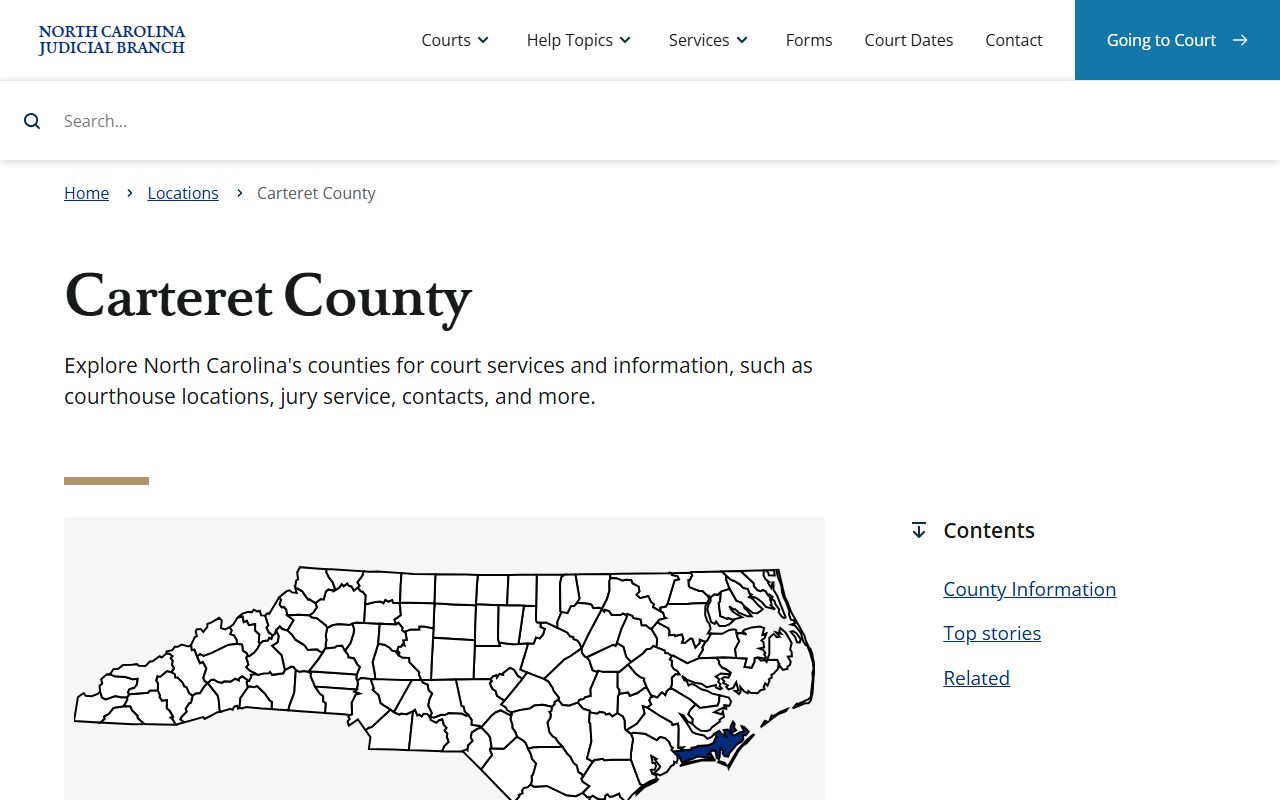
That local page is the best official hub when the exact portal module or office line is not yet clear.
Carteret County Court Search Fields
Smart Search gives Carteret County court record users several ways to narrow a lookup. Case number searches are strongest when the exact number is known. Name searches use the Portal's person-name format, and the advanced filters can limit by location, date of birth, case type, status, and filing dates. The Portal notes that JavaScript and cookies must be enabled, CAPTCHA checks appear at intervals, and older or restricted files may still require clerk help.
| Field Label | Type | Required | Notes |
|---|---|---|---|
| Record Number or Name | Text | Conditional | Search by record number or Last, First Middle Suffix format. |
| Filter by Location | Dropdown | No | Select Carteret County to keep results local. |
| Search Type | Dropdown | No | General, party name, nickname, business name, or similar options may appear. |
| Date of Birth From / To | Date | No | Useful for common names where public filters are available. |
| Case Type and Status | Dropdown | No | Can narrow civil, criminal, traffic, special proceeding, estates, or other labels if exposed. |
| File Date Start / End | Date | No | Limits results to a filing date range. |
The Smart Search dashboard is the main case lookup tool, while Search Hearings is used for calendars and court dates.
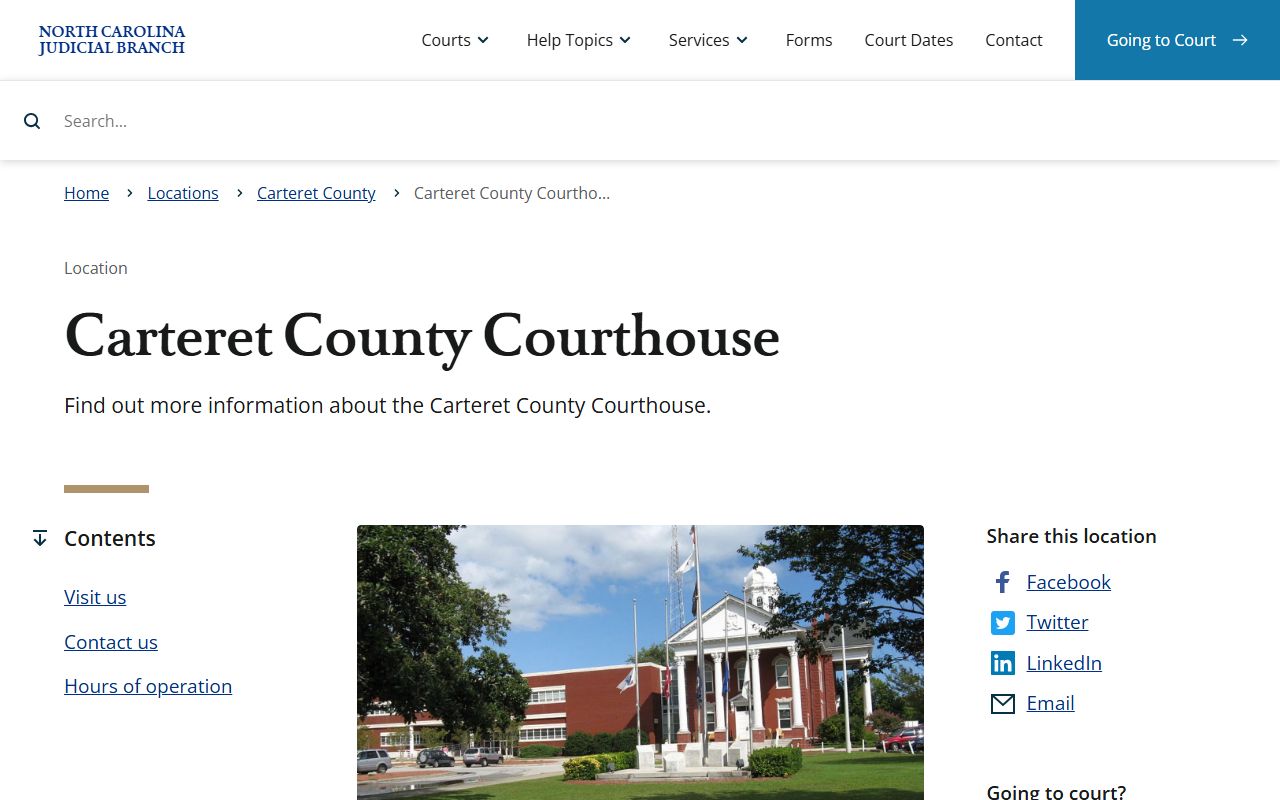
When a search result does not include the document itself, the file can still exist at the clerk's office in Beaufort.
Carteret County Court System
North Carolina does not use separate county-run courts. Carteret County is a local venue within the North Carolina General Court of Justice. The statewide system has an Appellate Division, a Superior Court Division, and a District Court Division. Superior Court handles felony crimes, civil cases generally at or above the state threshold, and appeals from District Court. District Court handles misdemeanors, infractions, traffic, family matters, juvenile matters, lower civil claims, and magistrate proceedings.
Magistrates are officers of District Court. In Carteret County, magistrates handle initial appearances, release conditions, warrants, small claims, evictions, involuntary commitments, and civil marriages. The Clerk of Superior Court keeps records for both trial divisions and also serves as probate judge for estates and related special proceedings. The District Attorney for Prosecutorial District 4 prosecutes state criminal matters in Carteret, Craven, and Pamlico counties.
| Level | Carteret County role | Local contact |
|---|---|---|
| Superior Court | Felonies, larger civil cases, District Court appeals | Superior Court Judges, (252) 639-3012 |
| District Court | Misdemeanors, traffic, family, juvenile, lower civil cases | District Court Judges, (252) 639-3011 |
| Magistrates | Initial appearances, warrants, small claims, marriages | (252) 504-4543 |
| Clerk of Superior Court | Trial court records, estates, special proceedings, payments | (252) 504-4400 |
| District Attorney | State criminal prosecution | (252) 504-4500 |
Case flow: Magistrate or citation event > District Court setting > Superior Court when a felony or appeal requires it > North Carolina appellate review when allowed.
Carteret County Record Routing
Many delays happen because the wrong office receives the request. Court dates, divorce judgments, estates, special proceedings, civil files, criminal case files, and traffic cases route to the Clerk of Superior Court or eCourts. Birth certificates, death certificates, marriage licenses, deeds, military discharges, assumed names, notary records, and real estate records route to the Register of Deeds. Incident reports, arrest information, jail bookings, warrant service, civil process, and inmate information route to the Sheriff's Office or the agency that made the record.
| Record need | Official Carteret channel |
|---|---|
| Court case file or certified court copy | Clerk of Superior Court, 300 Courthouse Square |
| Court date or hearing calendar | eCourts Search Hearings, civil calendars, criminal calendars |
| Marriage license or certified marriage copy | Register of Deeds, 302 Courthouse Square |
| Jail roster or inmate question | Carteret County Detention Center and inmate inquiry line |
| Warrant service or civil process | Sheriff's Civil and Warrant Division |
| Driver points or license status | N.C. Division of Motor Vehicles |
The county public-records request page is useful because it states these routing lines plainly. It is not a shortcut for court records, sheriff records, vital records, school records, or municipal records.
The county's public-records request routing page shows why court records, sheriff records, vital records, school records, and municipal records should not all be sent to one office.
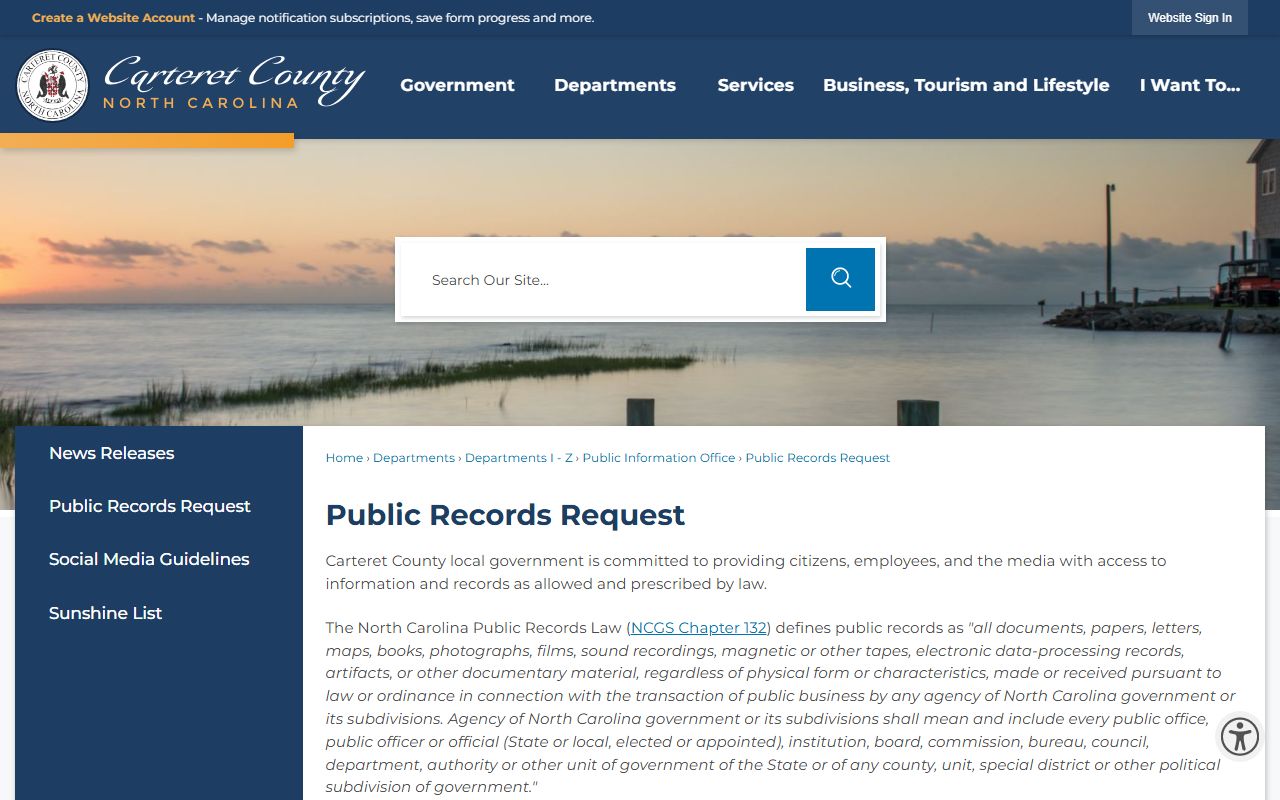
Use that routing rule before filing a request, especially when the record sits with the clerk, sheriff, or Register of Deeds.
Carteret County Court Record Types
Carteret County court records include civil, criminal, traffic, family, estates, probate, special proceeding, judgment, and hearing records. Civil files may show complaints, summonses, answers, motions, orders, judgments, liens, and appeals. Criminal files may show charges, pleas, hearings, dispositions, judgments, probation terms, fines, costs, restitution, and sentence information. Traffic files track citations, waivers, dispositions, fines, costs, and court dates, but they are not the same as NCDMV driver records.
Family and domestic files can include divorce judgments, custody orders, child support, domestic violence protective orders, and mediation-related events. Some parts may be restricted. Estates and probate records are handled by the Clerk of Superior Court as judge of probate. Juvenile, adoption, mental health, expunged, sealed, and safety-sensitive files are not ordinary public files even when a docket event exists.
- Civil records: claims, motions, orders, judgments, liens, and appeal notices.
- Criminal court records: charges, court dates, pleas, dispositions, sentences, and costs.
- Traffic records: citations, court dates, waivers, judgments, payments, and failures to appear.
- Family and divorce records: divorce judgments and related family orders held by the clerk.
- Probate and estates records: wills, estate files, letters, inventories, accountings, and special proceedings.
What Carteret Court Records Show
A Carteret County case record can show the case number, county, division, case type, case status, parties, attorneys, filing date, charge date, hearing dates, docket events, judgments, payments, and dispositions. Criminal and traffic records may also show offense descriptions, statutes, counts, charge class, bond or release terms, fines, costs, restitution, probation, and sentence entries. Civil and family records may show pleadings, service, motions, notices, orders, judgments, and appeal activity.
| Field | What it means |
|---|---|
| Case number | The unique court identifier used by eCourts and the clerk. |
| Case status | Whether the matter is open, disposed, dismissed, appealed, sealed, or otherwise marked. |
| Docket | The running list of filings, hearings, orders, continuances, and events. |
| Disposition | The result of a charge or claim, such as guilty, dismissed, responsible, or judgment entered. |
| Judgment | The court's final or enforceable ruling, including money, custody, conviction, or other relief. |
| Financial entries | Costs, fines, restitution, fees, payment status, or eligible online payment data. |
Carteret County Court Access Laws
North Carolina's public-records law broadly defines public records in G.S. 132-1, and the Chapter 132 framework governs many state and local agency records. Court records also have their own record-keeping rule. G.S. 7A-109 requires clerks to maintain court records and keep them open for public inspection during regular office hours unless another law restricts access.
Key statutes: Chapter 132 covers public-record inspection and copying. G.S. 132-1.4 treats criminal investigation records differently from normal public records. G.S. 7B-3000 covers juvenile court records and access limits.
Public access does not mean every document is online. The clerk's office remains the fallback for older files, certified copies, estates files, special proceedings, and paper records. Police investigative files, juvenile records, adoption records, expunged records, mental health records, protected addresses, Social Security numbers, financial account numbers, and safety-sensitive filings may be withheld, sealed, or redacted.
Carteret County Court Dockets
Court dates and docket information can be searched through eCourts Search Hearings, Carteret civil calendars, Carteret criminal calendars, and the local administrative schedules page. Search Hearings supports location, hearing type, case number, party name, business name, attorney name, attorney bar number, judicial officer, and courtroom fields. The local administrative schedules page also points users to civil and criminal calendars and says searches may be made by case number, party, or attorney.
The Carteret local administrative schedules page is the official schedule source for local calendar links and administrative postings.
Calendar pages help confirm when to appear, but same-day changes should be checked with the clerk or courtroom staff.
Carteret County Jail Records
The Carteret County Sheriff's Office operates the Carteret County Detention Center at 304 Craven Street in Beaufort. The detention center is the county jail facility and is responsible for care, control, custody, staff safety, and visitor safety. The official page lists the average daily population as 117 inmates. The inmate search page provides current inmate information as a public service, but it warns that data may be incomplete until fingerprint, criminal-history, or other identity checks are complete.
The official Carteret inmate search page is the local channel for current jail custody information.
Court users who need transportation to Beaufort can also check CCATS, the county transit service, but jail records and court files remain separate official records.
Carteret County Charges And Warrants
No official Carteret online active-warrant list was located in the research. Warrant checks should use the Sheriff's Civil and Warrant Division, the Clerk Criminal Division, magistrates, and eCourts case searches. The Sheriff's Civil and Warrant Division serves and executes court process, including summonses, subpoenas, domestic violence injunctions, evictions, and outstanding warrants. Magistrates issue warrants, conduct initial appearances, and set release conditions in appropriate cases.
Arrest records and court charge records are related but not the same file. The sheriff or arresting agency holds booking and law-enforcement records. The filed charge and later case events appear in the court case. The District Attorney prosecutes state charges, and the clerk keeps the case record once the matter is in court.
Carteret Marriage Divorce Probate
Marriage licenses and certified marriage copies are handled by the Carteret County Register of Deeds, not the court clerk. The Register of Deeds is at 302 Courthouse Square and is the local office for marriage licenses, birth and death certificates, real estate records, military discharges, notary records, assumed names, and similar recorded documents. Carteret marriage license requests have a 4:30 p.m. cutoff, even though the office is open later.
Divorce judgments are court records held by the Clerk of Superior Court in the county where the divorce was granted. Probate runs through the Clerk of Superior Court, who serves as judge of probate for wills, estates, guardianships, adoptions, partitions, and trust administration. Estate questions route to the Estates line, while special proceedings and juvenile matters route to Special Proceedings/Juvenile.
The Register of Deeds page is the official local source for marriage licenses, vital records, real estate recording, fees, and online record links.
The Register of Deeds and courthouse offices sit in the same Beaufort courthouse district, but they keep different records.
Carteret County Court Payments
Carteret payment rules differ by channel. Mail payments to the Clerk of Superior Court must be money order or certified check, with no cash and no personal checks. The payment should be made payable to Carteret County Clerk of Superior Court, and eligible traffic citation payments should include the citation number. In-person payments at the courthouse Cashier's Office may be made by cash, credit or debit card with processing fees, money order, or certified check. Personal checks are not accepted.
| Payment route | Accepted method | Important rule |
|---|---|---|
| Money order or certified check | No cash or personal checks. | |
| In person | Cash, card, money order, certified check | Cards have processing fees. |
| Online | Eligible credit or debit cards | Digital wallets such as Venmo and Cash App are not accepted. |
| Traffic citation by mail | Money order or certified check | Include the citation number. |
Carteret County Courthouse Visit
The Carteret County Courthouse is at 300 Courthouse Square, Beaufort, NC 28516, with the main court number (252) 504-4400. Public hours are Monday through Friday, 8:30 a.m. to 5:00 p.m. The Clerk of Superior Court, civil, criminal, estates, special proceedings, juvenile, magistrate, judges, District Attorney, bookkeeping, and Guardian ad Litem contacts are listed in the official court contact directory.
Carteret County Courthouse
300 Courthouse Square
Beaufort, NC 28516
(252) 504-4400
Monday-Friday, 8:30 a.m.-5:00 p.m.
Register of Deeds
302 Courthouse Square
Beaufort, NC 28516
(252) 728-8474
Monday-Friday, 8:00 a.m.-5:00 p.m.
Detention Center
304 Craven Street
Beaufort, NC 28516
(252) 728-8400
Inmate inquiry questions: (252) 504-4832
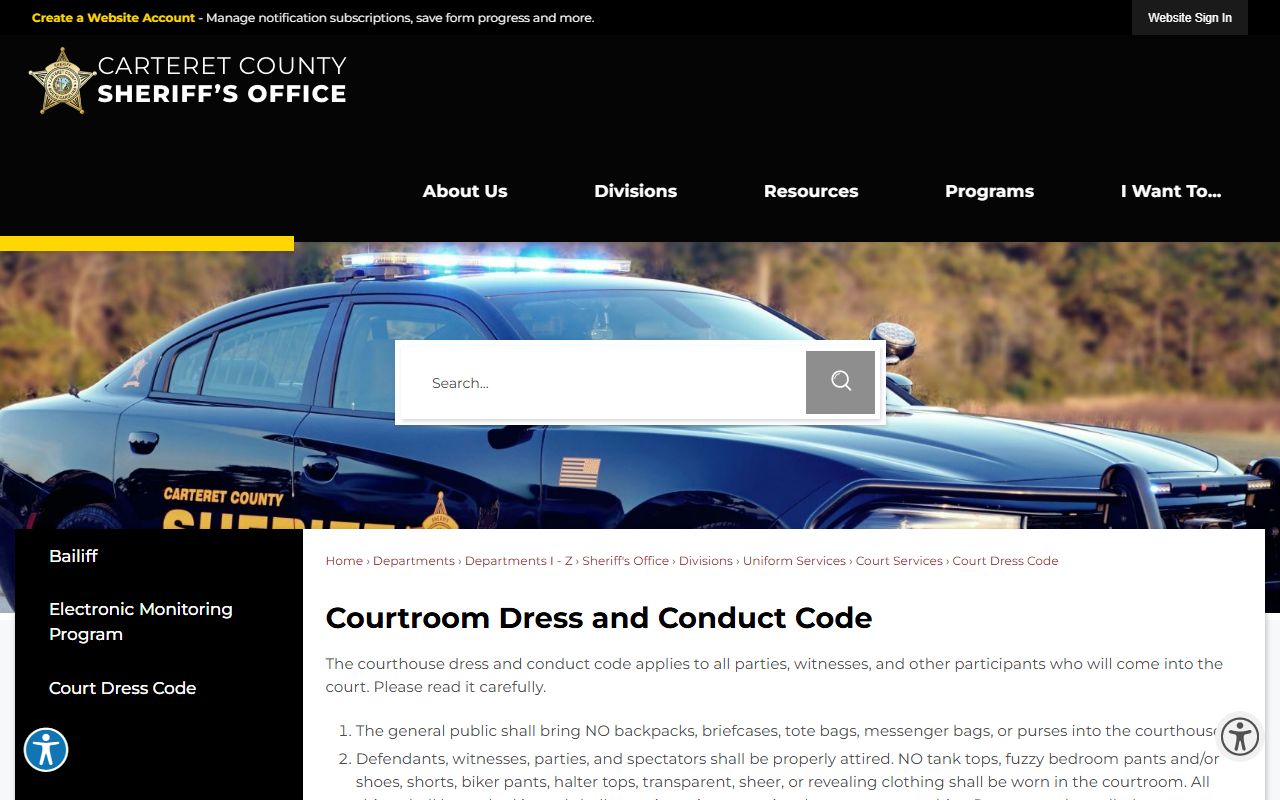
Courthouse visitors should read the local dress and conduct rules before arrival. The Carteret rule bars the general public from bringing backpacks, briefcases, tote bags, messenger bags, or purses into the courthouse and lists several attire restrictions.
The Town of Beaufort parking page is the source for downtown parking rates, limits, and enforcement rules near the courthouse district.
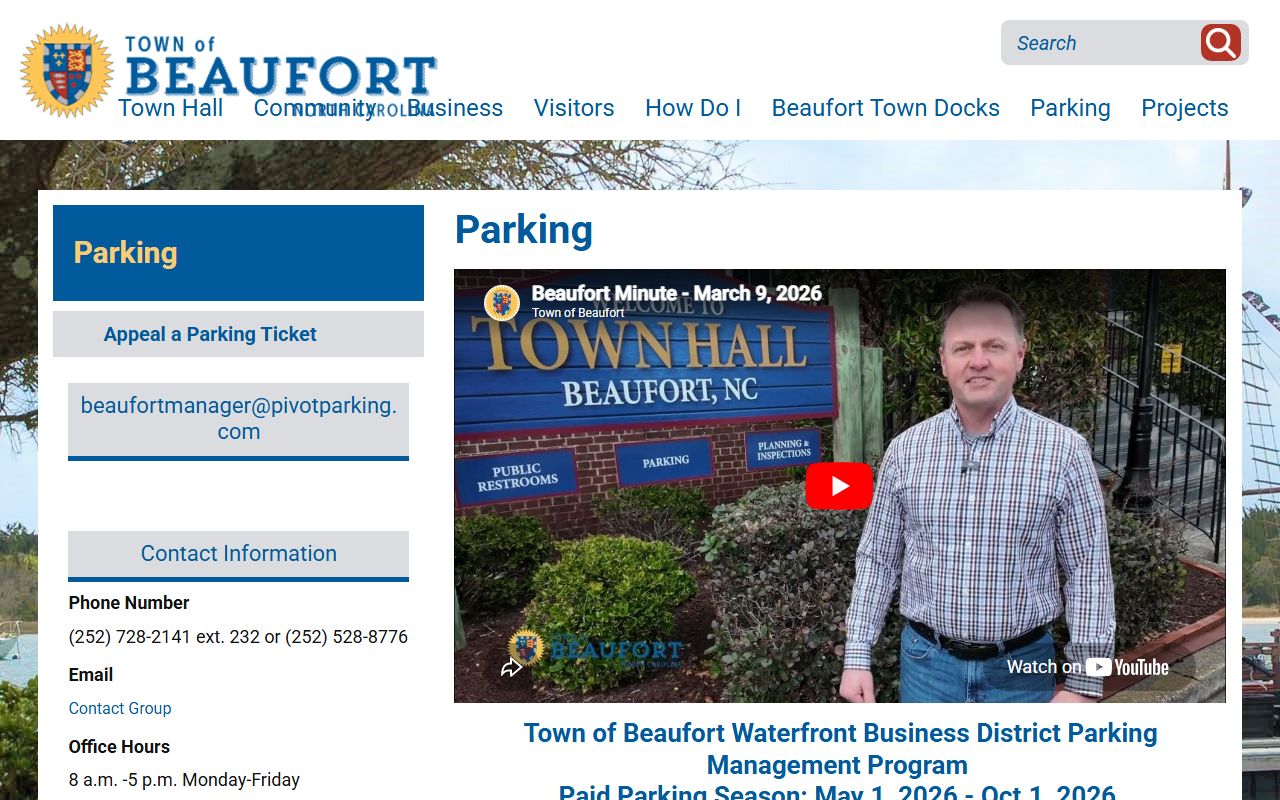
Parking rules are city rules rather than court rules, so posted signs should be checked before leaving a vehicle near Courthouse Square.
Carteret County Court History
Carteret County is one of North Carolina's older coastal counties. NCpedia places the county's formation in 1722 from Craven, with Beaufort as the county seat. The modern court system is not a separate county court system. It is a statewide Judicial Branch structure with Carteret serving as the local venue for trial court business.
The Census QuickFacts page gives current county context for population and land area, while local history sources tie Beaufort and the courthouse district to long-running county government functions.
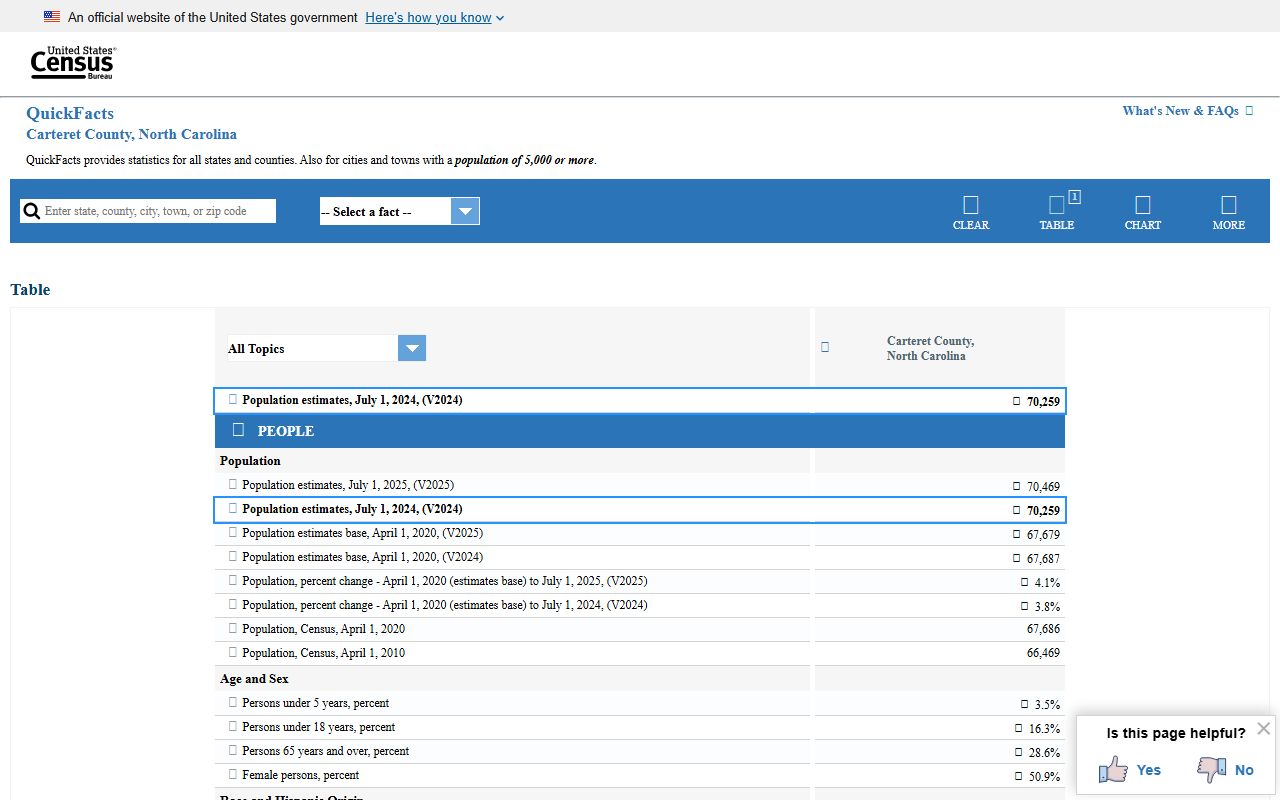
Those population and geography details help explain why many Carteret court users travel from beach, mainland, and Down East communities into Beaufort.
The NCpedia Carteret County page adds state-library history for the county seat and formation.
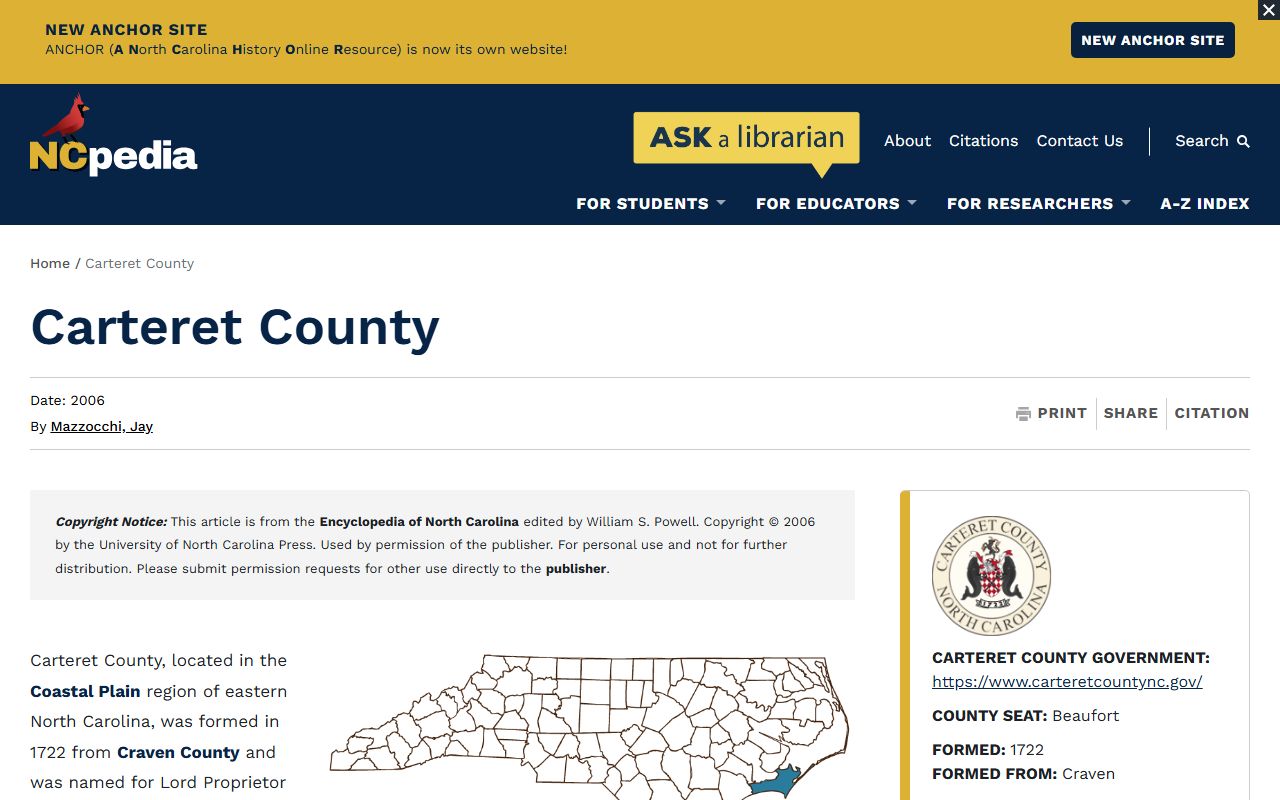
Historical context should not be confused with the current records system, which is administered by the North Carolina Judicial Branch.
Carteret Court Record Terms
Common record terms help separate a docket event from the final result. A charge is an allegation filed in court. A conviction is a criminal judgment after a guilty plea or trial result. A disposition is the outcome of a charge or case. A judgment is the court's enforceable ruling. An expunction is a process that clears eligible public record entries after a court order.
- Docket
- The chronological list of filings, hearings, orders, and case events.
- Magistrate
- A District Court officer who handles initial appearances, release conditions, warrants, small claims, and marriages.
- Special proceeding
- A clerk or court proceeding such as an estate, guardianship, partition, or certain foreclosure matter.
- Certified copy
- An official copy issued by the proper government office for legal use.
Carteret County Court FAQ
Where are Carteret County court records kept?
The Clerk of Superior Court keeps trial court records for Superior Court, District Court, estates, and special proceedings. Online case data may appear in eCourts, but paper files and certified copies come from the clerk.
Are Carteret arrest records the same as criminal court records?
No. Arrest and booking records come from law enforcement or the jail. Criminal court records show charges and case events after the matter reaches court.
Who handles marriage records?
The Register of Deeds handles Carteret marriage licenses and certified marriage copies. Divorce judgments are court records held by the clerk.
Is there an online Carteret warrant list?
No confirmed official online active-warrant list was found in the official sources. Use the Sheriff's Civil and Warrant Division, magistrates, Clerk Criminal Division, and eCourts case search.
Can online records be used as certified copies?
Online views are useful for lookup. Certified copies must come from the clerk, Register of Deeds, DMV, or other official custodian that holds the record.