
Carteret County Probate Court Role
North Carolina does not use a separate county probate court for Carteret estates. Probate runs through the Clerk of Superior Court, who serves as judge of probate. The statewide court-official guidance says clerks handle probate of wills, estate administration for deceased persons, matters involving minors and incompetent people, adoptions, guardianships, partitions of land, and trust administration. In Carteret County, that places probate work inside the same courthouse system that also handles civil, criminal, family, juvenile, and special proceeding files.
The Carteret contact directory lists Estates at 252-504-4455 and Special Proceedings at 252-504-4466. Those two channels matter because not every probate-adjacent matter is a simple estate file. Wills, letters testamentary, and estate accountings may route through Estates. Guardianships, partitions, and some related clerk proceedings may require Special Proceedings. For broader court-file help, the main Clerk of Superior Court number is 252-504-4400.
The Judicial Branch court-official source explains why the clerk is more than a filing office.
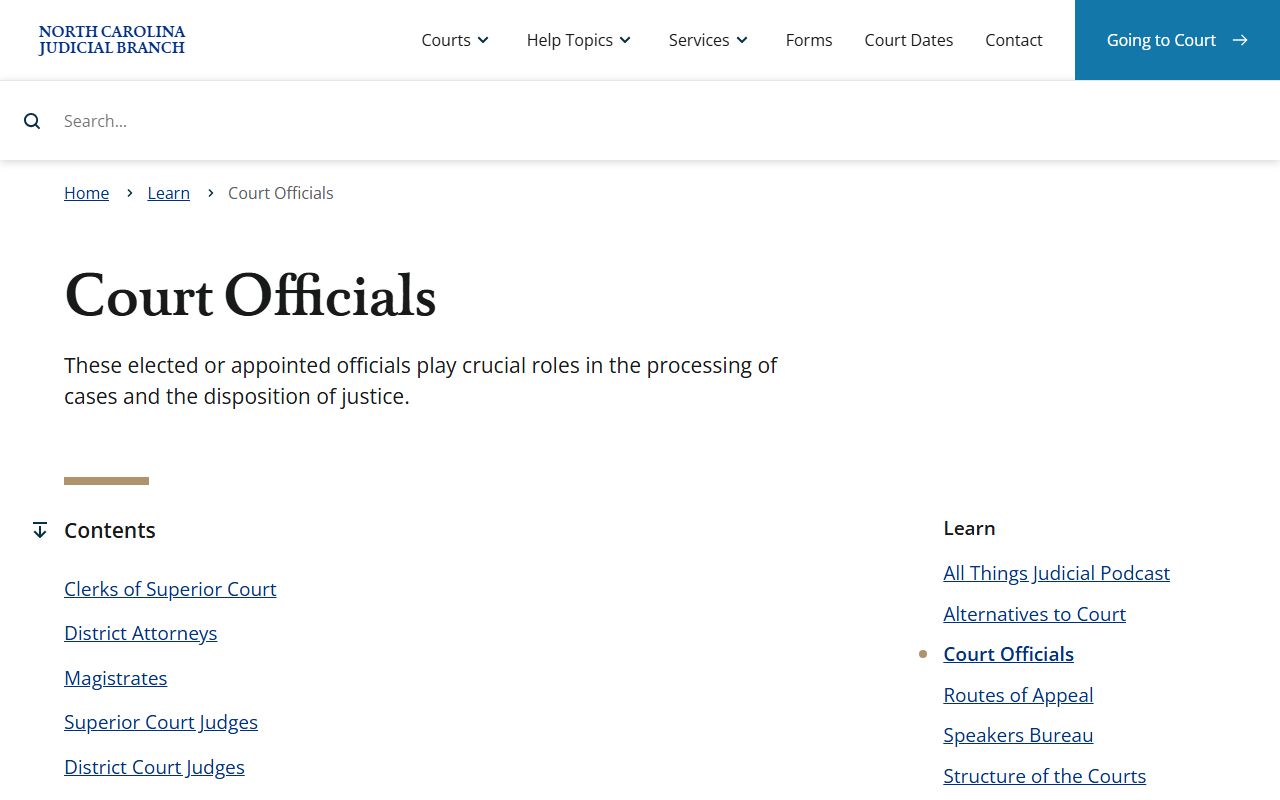
That statewide role is the legal reason Carteret County probate records are kept by the clerk rather than a separate probate judge.
Carteret County Estates Contact
Probate record requests should start with the office that holds the estate or special proceeding file. The courthouse is the local venue for Carteret County probate records, while online tools provide only the public case information that is available through eCourts. Paper files are viewed in the county where the case is located, and certified estate or probate copies should be requested from the Clerk of Superior Court.
Use the Estates line for routine wills, letters, inventories, and accountings. Use Special Proceedings when the matter involves guardianship, partition, adoption-related clerk work, or another proceeding that is not a simple estate administration file.
Carteret County Clerk of Superior Court
Probate role: Ex officio judge of probate
300 Courthouse Square
Beaufort, NC 28516
Main: 252-504-4400
Estates: 252-504-4455
Special Proceedings/Juvenile: 252-504-4466
Monday-Friday, 8:30 a.m.-5 p.m.
Carteret County Probate Record Types
Carteret County probate records can cover routine estate administration and contested or protective matters. A will and codicil may be submitted for probate. An application or petition may ask for appointment of a personal representative. The clerk may issue letters testamentary or letters of administration if the appointment is approved. Later filings may include inventories, accountings, creditor claims, notices, orders allowing sale or distribution, and final settlement material.
Some probate-adjacent files are not just estate files. Carteret clerk functions include guardianships for minors or incompetent adults, trust administration handled by the clerk, partitions of land, certain foreclosures, and special proceedings. These matters can have different public access limits. A case may be public in part, while medical, financial, juvenile, adoption, or protected-person details are sealed, redacted, or available only to authorized persons.
- Testator
- The person who made a will.
- Executor
- The person named in a will to carry out estate administration, if appointed by the clerk.
- Administrator
- A person appointed to handle an estate when no executor is appointed.
- Intestate
- Dying without a valid will.
- Guardianship
- A protective court proceeding for a minor or an incompetent adult.
- Special proceeding
- A North Carolina clerk or court proceeding such as an estate, guardianship, partition, or some foreclosure matter.
Search Carteret County Probate Records
There are three main access channels. The first is the North Carolina eCourts Portal, where Smart Search can locate public case information by record number or name when the file is indexed. The second is eCourts Search Hearings, which includes "Probate or Mental Health" as a hearing type. The third is the clerk's office, where public self-service terminals can show civil, special proceeding, and estate case information, while the actual paper file is viewed in Carteret County if that is where the matter is located.
| Field Label | Type | Required | Options / Format Notes |
|---|---|---|---|
| Smart Search record number/name | text | conditional | Search by estate case number or party/decedent name if indexed. |
| Filter by Location | dropdown | optional | Select Carteret County. |
| Case Type | dropdown | optional | Use if Portal exposes estates, probate, or special proceeding labels. |
| Search Hearings: Hearing Type | dropdown | yes | Choose Probate or Mental Health when searching hearing calendars. |
| Search Hearings: Search Type | dropdown | yes | Case Number, Party Name, Business Name, Attorney Name, Attorney Bar Number, Judicial Officer, or Courtroom. |
Individual Carteret probate files may not expose every document through public online search. Public fields may include case number, county, case type, filing date, estate or decedent name, parties, fiduciary or personal representative where public, attorneys, hearing dates, docket events, orders, and accounting filings where public.
Carteret County Estate Process
A probate file develops over time. Estates should confirm the exact form set, deadlines, and copy needs in a specific estate. Carteret's public court pages do not publish local small-estate dollar thresholds or local will-safekeeping rules here.
- Determine whether there is a will and whether Carteret County is the proper county based on domicile, assets, or the type of proceeding.
- Contact Estates at 252-504-4455 or visit the Clerk of Superior Court at 300 Courthouse Square.
- File the will, application, and required North Carolina AOC estate forms.
- The clerk reviews the request to appoint a personal representative, executor, or administrator.
- Letters are issued if the appointment is approved.
- The fiduciary gives notices, inventories assets, handles creditor claims, pays allowed claims, taxes, and costs, then files required inventories or accountings.
- The clerk or court addresses disputes, contested issues, guardianship questions, or special proceeding matters.
- Final accounting and distribution close the estate if accepted.
Note: Probate timelines can vary when heirs dispute a will, property must be sold, creditors file claims, or a guardianship issue is part of the same family history.
Carteret County Probate Copies
Copies of probate records come from the clerk, not from the Register of Deeds. Judicial Branch guidance says clerk staff can provide copies of documents in court files for a fee, but Carteret's public court pages do not publish a probate-specific filing or copy fee schedule here. Because fee amounts are not posted in those local sources, requesters should confirm cost, payment method, and certification needs with Estates before mailing a request or sending someone to the courthouse.
For a certified estate copy, identify the decedent or estate name, any case number, the document needed, and whether the copy must be certified. A certified copy may be needed for banks, title work, asset transfer, or proof of appointment. A plain copy may be enough for family or title review. Older files, sealed materials, or files with protected-person data may require staff review before release.
| Topic | Carteret Research Finding | Practical Action |
|---|---|---|
| Probate filing fees | Not published in the Carteret public court pages used for this topic. | Call Estates before filing or mailing payment. |
| Certified probate copies | Clerk staff can provide court-file copies for a fee. | Ask for amount and accepted payment method before ordering. |
| Small-estate thresholds | Not published in the Carteret public court pages used for this topic. | Use current North Carolina AOC forms and confirm with Estates. |
| Will-safekeeping local rules | Not published in the Carteret public court pages used for this topic. | Ask the clerk before assuming a will is held by the court. |
Restricted Carteret County Probate Files
Some Carteret County probate records are public, but probate-adjacent categories can carry strict limits. Guardianship records can involve medical, mental-health, financial, and protected-person details. Adoption records are not ordinary public files. Juvenile records are maintained by the clerk under G.S. 7B-3000, but they are not open in the same way as ordinary civil files. Abuse, neglect, and dependency records are withheld from public inspection except by court order under North Carolina juvenile-record rules.
The juvenile-record statute image is relevant because guardianship and special proceedings can touch minors or protected persons.
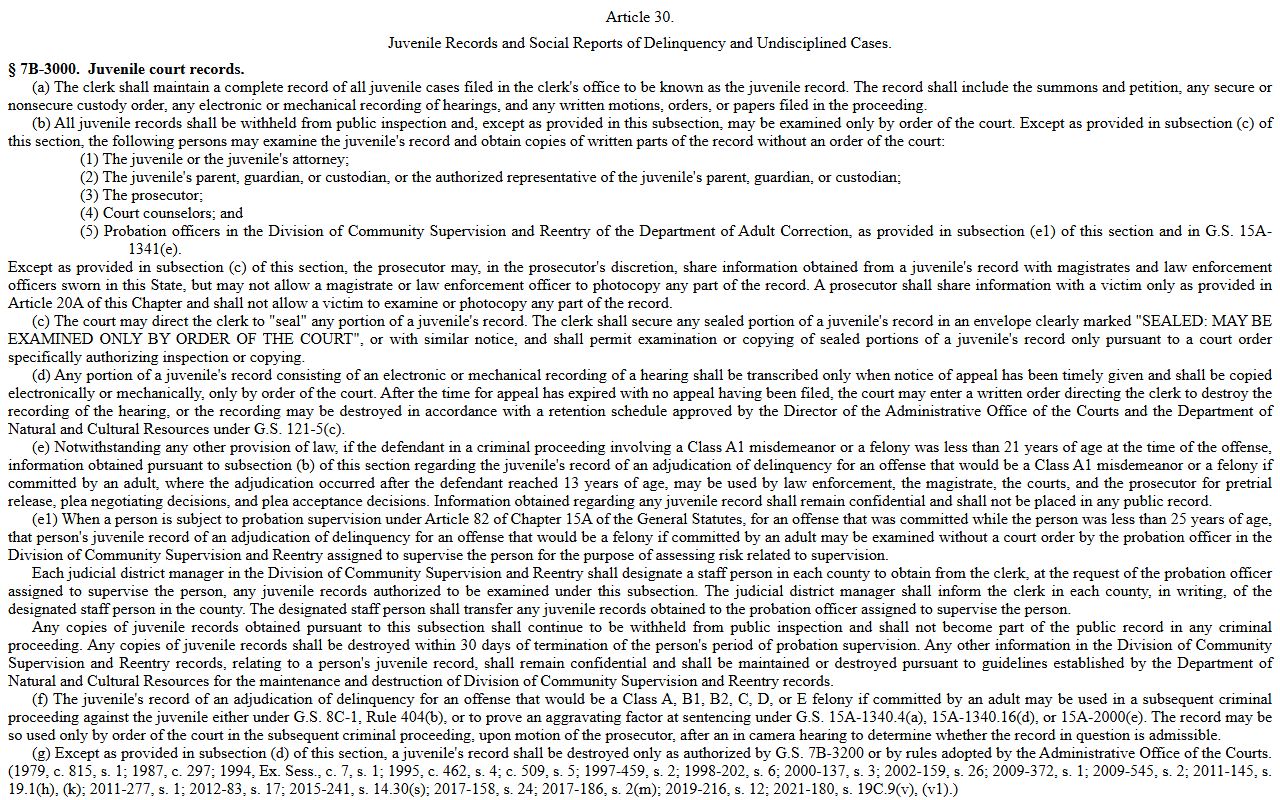
That statute supports the access warning: not every clerk-held probate-related file can be viewed like a routine estate docket.
Expunged, sealed, mental-health, adoption, and protected-person records may not appear in public search results. If eCourts does not show a record, that does not prove no file exists. It may be older, not indexed, county-file only, or restricted by law. The Carteret County Clerk of Superior Court is the records custodian for these probate court files.